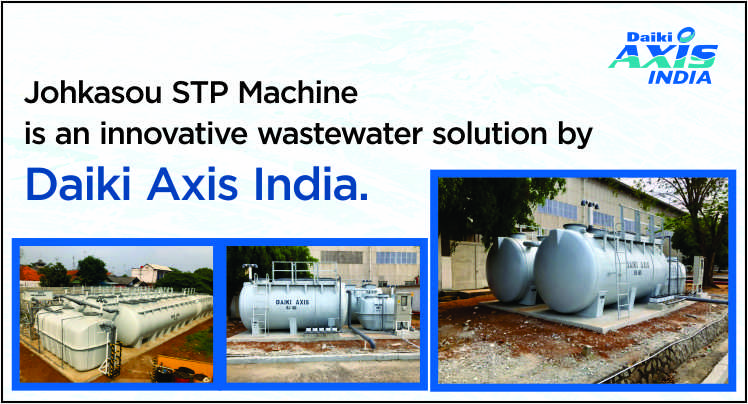
Daiki Axis India successfully installed a Johkasou Sewage Treatment Plant (STP) at the Saif Mansion (ABC House), Banani. This compact system, with a treatment capacity of 5m3/day, is designed to ensure efficient wastewater treatment while taking up minimal space.
In this project, the Johkasou module is from DAIKI AXIS, Japan. The module is installed under the car parking of the house, and its capacity is 5 m3/day. There is a blower for the aeration process, and the treated water goes directly into the Gulshan Lake. it takes a space of length: 2.80 m, Width: 1.70 m, and height: 1.98 m.
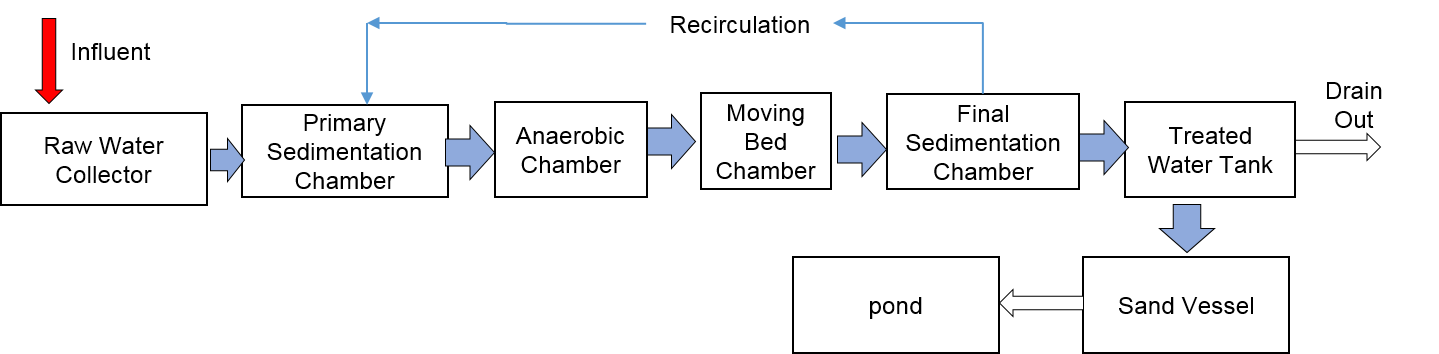
The Johkasou STP at the Saif Mansion (ABC House), Banani follows a systematic treatment process:
The entire system operates seamlessly, ensuring effective sewage treatment with minimal environmental impact.
As a subsidiary of Daiki Japan, we bring expertise and innovation of Japanese wastewater treatment technology to India
The Johkasou STP at Saif Mansion (ABC House), Banani A perfect example of sustainable wastewater management in urban Bangladesh
Advanced Japanese sewage treatment technology implementation
Compact, energy-efficient designs tailored to client needs
Successful projects across Bangladesh with quality assurance
Meets specific Bangladeshi environmental requirements
Sewage Treatment Plants (STP) are very important for India to keep the environment clean and safe. With more people and industries growing every day, untreated sewage is causing serious problems. Dirty water from homes and factories often goes into rivers and ponds, making them unsafe for drinking, farming, or fishing. This pollution also harms fish and plants. Without proper treatment, sewage can spread diseases like cholera and diarrhea, putting many lives at risk.
Prevents waterborne diseases and protects community health
Protects rivers, ponds, and marine ecosystems
Prevents flooding and bad odors in crowded cities
Ensures usable water for future generations
Protecting our rivers is protecting our future
Only about 405 rivers are still active, and many of them are at risk due to pollution and illegal activities.
Rivers like the Buriganga are so polluted they can no longer support life. Shitalakhya, Turag, and Balu are also in danger.
Rapid growth in cities and industries continues to increase pollution levels daily.
It's crucial for Bangladesh to act now to protect our rivers, improve water quality, and protect public health.
Contact UsInvesting in wastewater treatment is investing in a better, cleaner Bangladesh
Taking action now can help preserve the country's rivers, improve water quality, and protect the livelihoods of millions of people who rely on these waterways.
Clean water supports fishing, agriculture, transportation, and tourism - essential sectors for Bangladesh's economy.
As floods and rising sea levels become bigger challenges, STPs are needed to keep communities safe and healthy.
Talk to our experts and discover how Johkasou technology can make your project compliant, efficient, and eco-friendly.